
Birmingham rental market: why rents and yields keep rising
Birmingham rents rose 55.9% in five years. Average rents, yields by property size, why supply is tightening and what it means for investors.
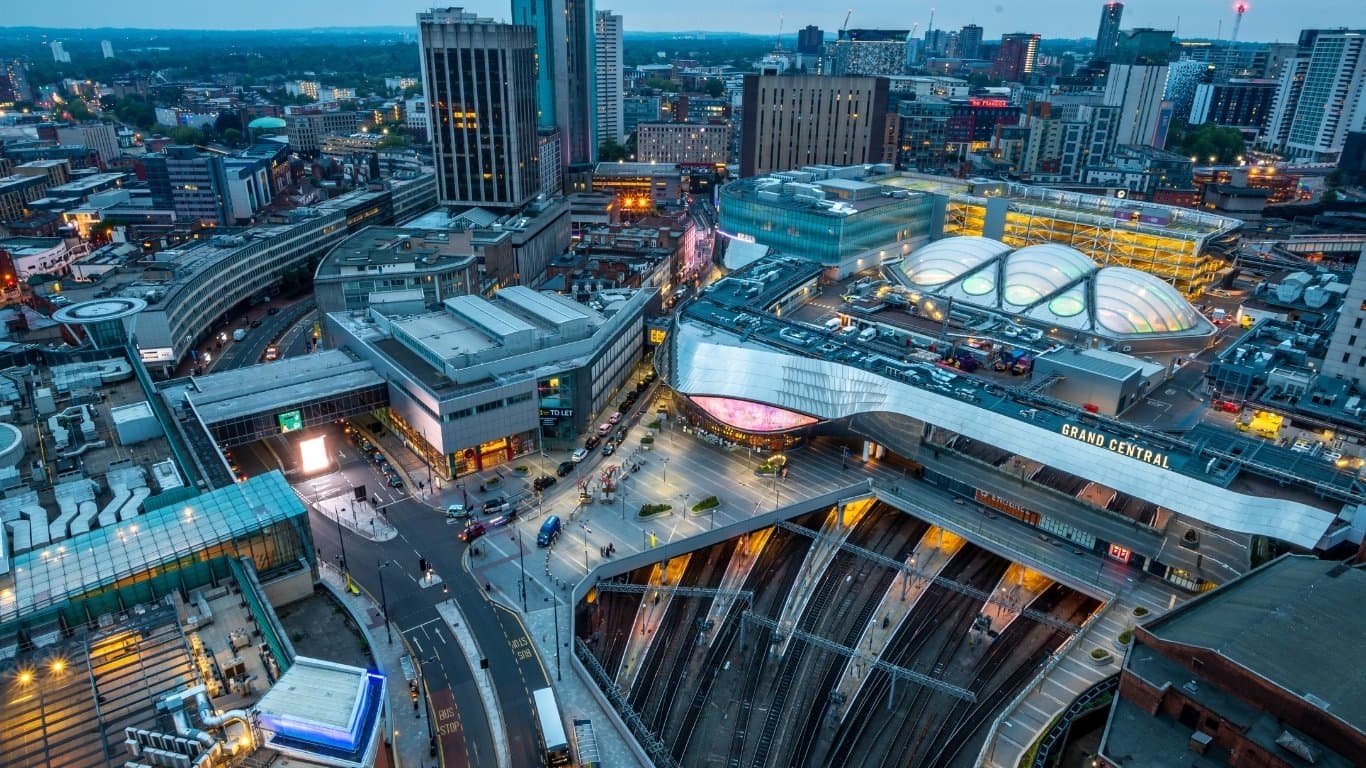
Birmingham has the strongest rental story of any major UK regional city. Rents have risen faster than almost anywhere outside London, tenant demand keeps growing, and new supply is slowing. Here is what the numbers show.
How much have Birmingham rents risen?
Over the last five years Birmingham rents rose 55.9%, according to JLL's Big Six research. That is one of the fastest rates of any large UK city.
The average private rent in Birmingham reached £1,093 a month in July 2026, up 2.8% over the year, on ONS figures.
By property size:
| Property | Average monthly rent |
|---|---|
| One bedroom | £825 |
| Two bedrooms | £997 |
| Three bedrooms | £1,127 |
| Flats and maisonettes | £914 |
What yield does a Birmingham flat produce?
The average Birmingham flat costs £146,467, on Land Registry figures for June 2026. Letting at the ONS average flat rent of £914 a month gives a gross yield of about 7.5%.
That compares with a UK average property price of £272,188. Birmingham lets investors buy in at roughly half the national average price while earning a rent that has been rising every year.
Gross yield is stated before mortgage costs, management, service charge, ground rent, voids and tax, and both figures are city averages.
Why are Birmingham rents rising?
Two forces, working in the same direction.
Demand keeps growing. Birmingham has one of the largest student populations in Europe, a young and expanding workforce, and continued relocation of professional and public sector jobs into the city centre.
Supply is tightening. JLL reports that residential delivery in Birmingham is being held back by build viability and planning bottlenecks, so fewer new homes are reaching the market than the pipeline suggests. Fewer completions against steady demand puts upward pressure on rents.
JLL forecasts Birmingham rental growth of 18.8% between 2025 and 2029, ahead of its UK forecast of 17.1%.
Why renters choose Birmingham
Rents remain well below London for comparable space and quality. The city centre is compact and walkable, transport into the core is good, and the amount of new build to rent stock means renters can access modern buildings with amenities that older stock does not offer. Birmingham is now the largest regional build to rent market in the UK.
Why investors choose Birmingham
A low entry price, a gross yield near 7.5% on average stock, five years of rental growth behind it, and a forecast of further rental growth ahead of the UK average. For an investor buying from abroad, the low entry price also means less capital tied up in a single asset.
Frequently asked questions
What is a good rental yield in Birmingham? Average stock produces roughly 7.5% gross on current figures. City centre new build typically prices higher and yields lower, with better tenant demand and lower maintenance.
Are Birmingham rents still rising in 2026? Yes. ONS recorded 2.8% growth in the year to July 2026, and JLL forecasts 18.8% growth between 2025 and 2029.
How much is rent for a one bedroom flat in Birmingham? £825 a month on average, on ONS figures for July 2026.
Is Birmingham better for income or capital growth? On current evidence Birmingham is stronger for rental income than for short term capital growth. Buyers should hold for the long term and should not rely on early price appreciation.
Is Birmingham better than Manchester for property investment? Birmingham has a lower entry price and a slightly higher average gross yield. Manchester has delivered stronger capital growth over the last decade. We looked at the Manchester market in a separate note.
Important
Property values and rental income can fall as well as rise and your capital is at risk. Projected figures are indicative and not guaranteed. Amoka provides property and investment services, not regulated financial advice.
Answered in short.
What is a good rental yield in Birmingham?
Average stock produces roughly 7.5% gross on current figures. City centre new build typically prices higher and yields lower, with better tenant demand and lower maintenance.
Are Birmingham rents still rising in 2026?
Yes. ONS recorded 2.8% growth in the year to July 2026, and JLL forecasts 18.8% growth between 2025 and 2029.
How much is rent for a one bedroom flat in Birmingham?
£825 a month on average, on ONS figures for July 2026.
Is Birmingham better for income or capital growth?
On current evidence Birmingham is stronger for rental income than for short term capital growth. Buyers should hold for the long term and should not rely on early price appreciation.
Is Birmingham better than Manchester for property investment?
Birmingham has a lower entry price and a slightly higher average gross yield. Manchester has delivered stronger capital growth over the last decade. We looked at the Manchester market in a separate note.
See our latest developments in Birmingham.
 Off-plan
Paper Yard
 Off-plan
Fountain Court
 Off-plan
No. 30 St Pauls
 Off-plan
Chapmans Yard
 Off-plan
Gunsmith House
 Off-plan
Origin
 Off-plan
Boulevard
Talk it through with a chartered surveyor.
Thirty minutes, no obligation, and a straight answer on whether the numbers work for you.